
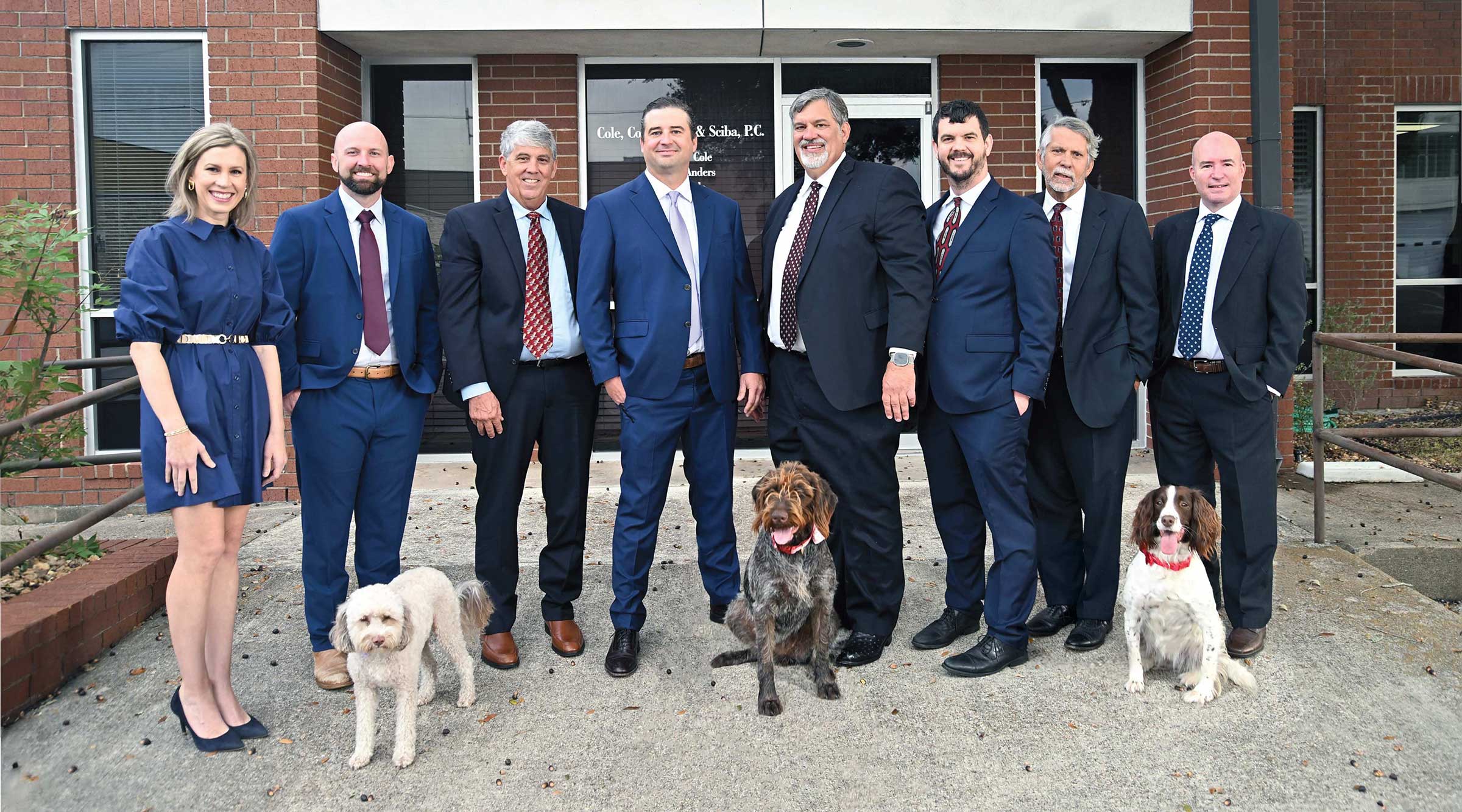
Cole, Cole, Easley and Sciba Trial Attorneys can guide you through the claims process if you’ve been hurt in a Port Lavaca car accident. When you’ve been in a car accident, talking to a lawyer probably isn’t the first thing on your mind. At first, you’re making sure everyone is okay, getting medical care, and trying to figure out what just happened. But once the shock wears off, things can start to change. We’ll be there to help you through it all. Set up a free consultation today.

Why Would I Need a Lawyer For a Car Accident Claim?
Even if you’ve never been in a serious car accident before, it’s pretty likely that you at least know about them. But it’s totally different when you’re in one. It’s a lot to deal with. And that’s when it can make sense to talk to our team. We’ll help you:
- Look into how the accident happened
- Help gather the information and evidence that matters
- Talk to witnesses, doctors, and other people who may have information about the accident
- Handle the back-and-forth with the insurance company
- File a lawsuit if that’s what it takes to get a fair offer
After a car accident, you’re already dealing with enough. Our goal is to take as much of the legal and insurance side off your shoulders as we can so you can focus on getting better. That’s easier said than done, though. Especially when you consider how many different ways a car accident can happen around Port Lavaca.
Where Car Accidents Usually Happen in Port Lavaca
You can be a careful driver and still end up in a car accident in Port Lavaca. That’s because you can’t control what the person in the car next to you is doing. Around here, you have people driving through town, heading toward the causeway, traveling along Highway 35, or going in and out of the businesses and neighborhoods around the city. Add in local traffic, visitors who may not know the roads as well, and larger vehicles sharing the road, and there are plenty of opportunities for something to go wrong. That usually ends up in:
- Rear-end collisions on Highway 35 and other busy roads through town.
- Head-on crashes on two-lane roads around Port Lavaca and Calhoun County
- Sideswipes and broadside crashes at busy intersections
- Accidents in parking lots and shopping plazas
- Crashes involving trucks and other large vehicles
- Accidents involving drivers heading to or from the Port Lavaca waterfront and causeway
While these are the most common kinds of car accidents you’ll find here, it’s important to understand that every single car accident is different. Yes, there are patterns, but the claims process is about what’s happened to you in particular. That’s why what happens after the accident matters. You need to know what information to look for, who may be responsible, and how the claims process works.
What Should I Look For After My Car Accident?
Whether you’ve been in an accident before or this is your first one, the time immediately after the crash can be important when it comes to gathering information. Of course, your health and safety come first. The very first thing you need to do is:
- Call 911 to report the accident and get police and medical help to the scene.
Everything else can wait, but once things settle down a bit at the scene, try to get just a few basic things like:
- Pictures and videos of the cars, road, skid marks, traffic signs, weather conditions, and any injuries
- Names and contact information for anyone who saw what happened
- Insurance information, driver’s license information, and contact details from the other driver or drivers
That’s really all you need to worry about at the scene. You don’t need to become an investigator while you’re standing on the side of the road. Focus on getting medical care and answering any questions from the police. Then, in the next few days and weeks, more information will start coming in. Try to keep track of your:
- Medical records from the ER, urgent care, follow-up visits, and physical therapy.
- The police report and repair estimates for your car
- Photos showing how your injuries are changing as you recover
- Notes about doctor appointments, time missed from work, pain, and things you can’t do because of your injuries
- Letters, emails, claim numbers, and other information from the insurance company.
- Dashcam or nearby security footage, if it’s there
You’re not trying to solve the accident with all of this information. You’re just putting together the pieces. A few pictures, some contact information, and notes about what happens after the accident can go a long way toward getting the claims process started.
Who’s Responsible For My Injuries in a Car Accident?
The biggest thing about a car accident is obviously your health. But there are several other important factors that come with it, and none are more impactful than legal responsibility. This is what’s going to shape how the entire claims process plays out, so if you know how that works ahead of time, it can give you a headstart if you actually do need to file a claim.
In legal terms, it’s called liability. And it usually comes down to negligence—someone did something they shouldn’t have done, or failed to do something they should have done, and that led to the accident and your injuries.
Sometimes that easy to figure out, like if the other driver:
- Was distracted by their phone while driving through town
- Failed to yield at an intersection
- Was speeding or driving too fast for the road or weather conditions
- Made an unsafe turn or lane change
- Followed too closely and couldn’t stop in time
- Was driving while impaired by alcohol or drugs
But it can also get really complicated with certain accidents. It’s not always the other driver solely. Others can be involved too, like:
- The person who owns the vehicle but wasn’t driving it
- A trucking or delivery company
- A company that made the vehicle or one of its parts
- The city or state government agencies responsible for the roadway
The reason it’s so important to nail down responsibility as much as you can is pretty simple: that gives you the person or group that has to actually pay for your injuries and other losses. But when you get to that point, it usually means dealing with an insurance company and the actual filing of a claim.
How the Claims Process Usually Works After a Car Accident
Nobody expects one moment on the road to turn into medical bills, car repairs, missed work, and changes to everyday life. But that’s exactly what can happen after a car accident. There’s ongoing doctor’s appointments, days and weeks of your car being fixed in the shop, time off from work while you recover, pain, anxiety, and a lot of stress.
All of these things are very real, and they’re all part of what’s called your “damages.” This is just the legal word for the financial help that’s available to you through the claims process. To actually get damages, though, you have two main options:
- Filing an insurance claim
- Filing a personal injury lawsuit
A lot of people start with the insurance company. It’s less formal and can sometimes be resolved more quickly. The problem is that you’re dealing with an insurance company that’s trying to decide what your claim is worth. And the insurance adjuster doesn’t necessarily see the whole picture.
They see medical bills and repair estimates. They don’t necessarily see how your injury has changed your day-to-day life, how much pain you’re in, or what you may still have to deal with months from now.
That’s also why settling too quickly can create problems. You may not know how serious your injuries are yet or how long your recovery is going to take. Once you accept a settlement, you generally can’t go back later and ask for more money if things get worse.
If the insurance company won’t make a fair offer, a personal injury lawsuit may be the next step. That takes more time and effort, but it can give you the opportunity to get fuller damages for things like:
- Current and future medical expenses.
- Current and future lost income.
- Car repair or replacement costs.
- Pain and suffering.
- Emotional distress.
- Reduced quality of life.
- Wrongful death expenses in fatal accidents.
Texas generally gives you two years to file a claim after a car accident. That sounds like a lot of time, but the longer you wait, the more difficult the process can be. Even if you’re still recovering or aren’t sure what you want to do, it’s worth understanding your options sooner rather than later. A great way to do that is by talking to our team early on.
Frequently Asked Questions
What should I do if the other driver doesn’t have insurance?
You may still be able to recover compensation through your own uninsured/underinsured motorist (UM/UIM) coverage. Check your policy before assuming you have no options.
Do I need to report a car accident to the police?
If anyone is injured or there is significant property damage, you should report the accident to police. An accident report can also help support your insurance claim later.
Will my case end up in court?
It could, but a lot of car accident claims settle well before that, especially when our team represents you. We have years of experience when it comes to negotiating with insurance companies, as well as going further with lawsuits.
Cole, Cole, Easley and Sciba Will Help You After a Car Accident in Port Lavaca
A car accident can throw everything off at once. Medical care, time off work, insurance calls, repair bills—it adds up quickly, and it isn’t always clear what you’re supposed to do next. Your situation is also different from everyone else’s. Your injuries, your job, your family, and the way the accident has affected your life all matter.
That’s where our Port Lavaca car accident lawyers at Cole, Cole, Easley and Sciba Trial Attorneys come in. We’ll help you understand your options, figure out who’s responsible, and deal with the insurance company while you focus on getting your life back on track. Set up a free consultation today to get started.